Plastic still wet in the dishwasher? Check what else is wet
Jump to instructions ↓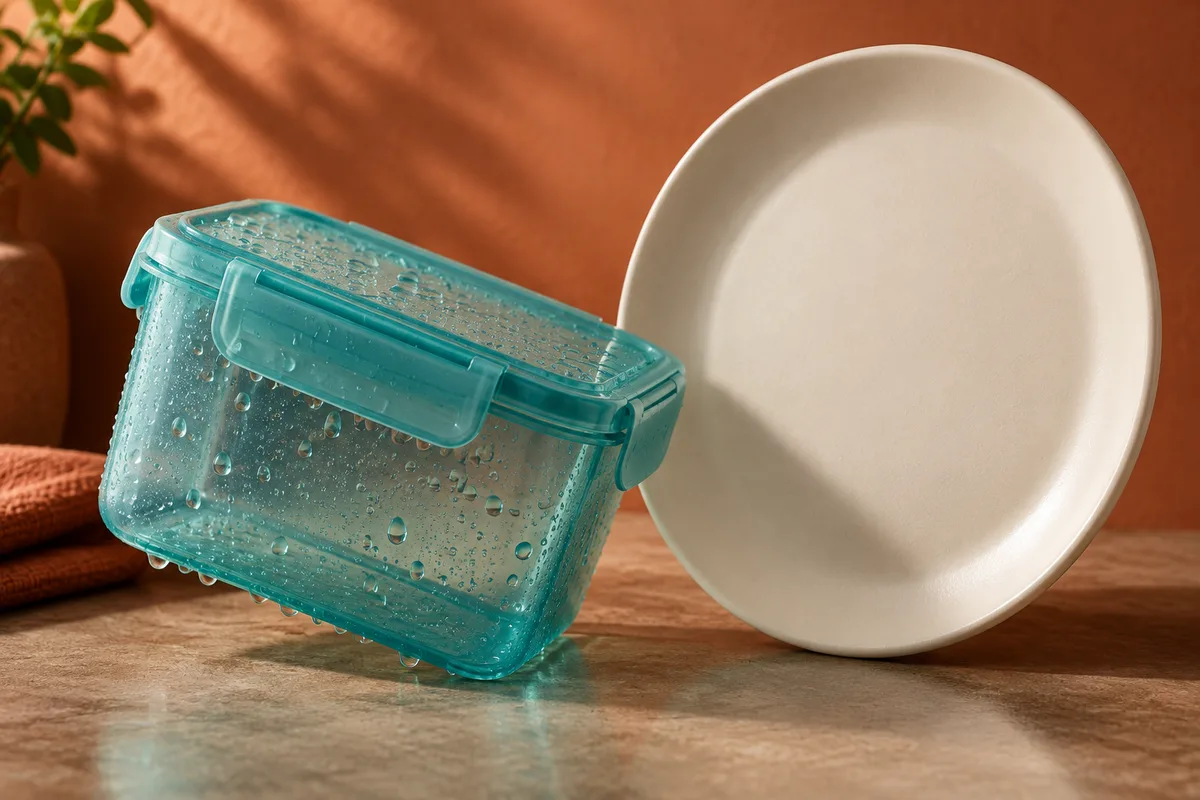
Read the load before changing a setting
Let the programme finish and follow the manual’s unloading instructions. Look at a plastic container, a glass and a plate from that load.
| What you find | First check |
|---|---|
| Only plastic has droplets | Material, loading and rinse aid |
| A puddle sits in a lid or container rim | Whether that recess can drain |
| Glasses and plates are wet too | Drying option, rinse aid and cycle completion |
| Food remains or detergent is undissolved | Washing performance before drying |
This comparison narrows the problem. It is not a heater test, and a dry plate cannot prove every component is working.
If only plastic stays wet
Samsung explains that lightweight plastic cools quickly, which makes it harder to dry in a condensation-drying dishwasher. Droplets on those containers can remain after other items have dried.
Do not keep rerunning a clean lunchbox to chase the last beads of water. Let it finish air-drying or dry it with a clean towel before storage. Samsung’s troubleshooting table specifically notes that plastic dishes may need manual drying.
Check the container’s own dishwasher instructions too. A recycling symbol is not a loading or temperature instruction. If suitability is unclear, wash it by hand according to its maker’s care guidance.
If a rim holds a puddle
Before the next cycle, adjust the item so water has somewhere to run off. Separate nested containers and lids; leave the spray arms and detergent door clear. Use your machine’s rack arrangement rather than balancing lightweight items where they can fall.
Bosch’s drying guidance starts with spacing between items so water can drain. A drying setting is not a substitute for a lid that is effectively acting as a small bowl.
Keep the comparison simple: change the position of that item, not the detergent, programme and loading all at once.
Check rinse aid and the drying option
Look in the manual for the rinse-aid indicator, filling instructions and dosage setting. Refill only the designated dispenser with a suitable product. Do not pour washing-up liquid or a homemade mixture into it.
Bosch recommends rinse aid and checking whether an extra-drying option is available. Read the option’s description before selecting it, and respect the container’s heat limits. More heat is not a universal fix for plastic.
Door-opening instructions also vary. Some Samsung models open automatically after a cycle; other machines have different requirements. Follow your own manual rather than wedging a towel in the door or interrupting a running cycle. Keep clear of hot steam.
When this is more than a wet lunchbox
If the whole load suddenly dries worse than before, note any error code or flashing-light pattern and confirm that the programme completed. Contact the manufacturer if the problem continues after its recommended user checks. Do not open panels, test electrical parts or change your home’s hot-water settings for this guide.
Dirty dishes or leftover detergent need a different starting point: check where the dishwasher tablet stopped. A dry but hazy glass is another problem again: test for removable film before scrubbing.
Official guidance checked October 10, 2026.